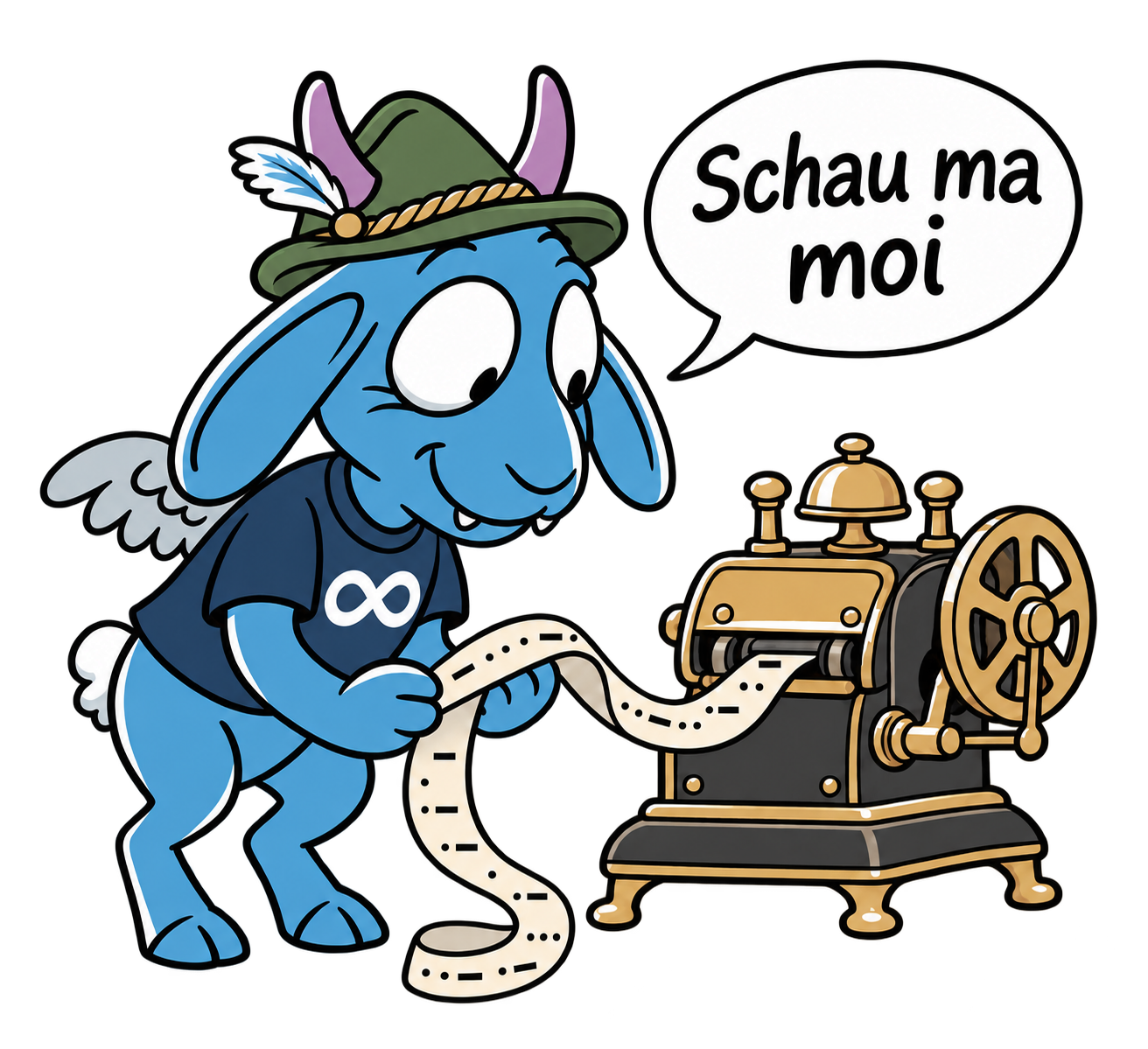
Distillery
GA4 events reach schaumamoi from a stream (NATS JetStream) or as a replay from a database. pkg/distillery is the step in between: per user, it takes the events in, works on them once, and keeps them ready for any number of states to be distilled from them: a taste vector, a funnel, the phases of a history.
| Word | What happens | API |
|---|---|---|
| feed | events go into the user's still, a batch at a time, in arrival order | Still.Feed(envelope, events...) |
| cut | what isn't worth keeping is cut, and gone | Config.Cut |
| infuse | what is known about each kept event is infused into it, once | Config.Infusers |
| distill | a recipe reduces the infused events to a state of its own type | Still.Distill(recipe) |
| draw off | what the still should no longer hold is drawn off, by a rule | Config.DrawOff, Still.DrawOff(rule) |
still := distillery.New(distillery.Config[Envelope, Params, Infusion]{
    Cut:      keep,      // which events are kept at all
    Infusers: infusers,  // what is infused into each one, in order
    DrawOff:  policy,    // what is drawn off again, after every feed
})

still.Feed(envelope, events...)    // cut and infuse, once, on arrival
spirit := still.Distill(recipe)    // a pure read, as often as you like
still.DrawOff(rule) // and on request- Cut and infused once.
Feedruns the cut and then the infusers on every event as it arrives, and keeps the result. Distilling never infuses again, no matter how often or how late it runs. - One still, many recipes. A recipe reduces the infused events to whatever state it describes, and the state's type belongs to the recipe. One user's events can answer unrelated questions (taste, a funnel, phases of a history) without being fed twice. Unlike a real run, distilling uses nothing up.
- The envelope exists on the way in only. Each batch comes with an envelope: what the routing stage knows beyond the events, such as time, session and consent. The cut and the infusers see it, but the still doesn't keep it. Whatever a recipe needs from it, an infuser copies into the infusion.
- Anything relative to now belongs in a recipe. An infusion is fixed on the way in, so recency (decay, fading) is computed when distilling, with "now" handed in rather than read off the clock.
Drawing off
What goes in doesn't have to stay. A Rule decides, event by event, what the still should no longer hold, and it runs two ways:
- As a standing policy.
Config.DrawOffreturns a rule for each batch's envelope, and the still draws it off after every feed. The batch's time is the still's "now", so the policy is judged against the stream, not against the clock. - On request.
Still.DrawOff(rule)draws off what the rule selects, and reports how many events it removed: a session the user asked to forget, everything once consent is withdrawn.
Rules are small and compose. They are built from a Rules value, which fixes the still's type arguments once, since Go can't infer them from a rule's own arguments. A still package declares one, e.g. var Rules distillery.Rules[any, Infusion]:
| Rule | Draws off |
|---|---|
KeepLast(n) | everything but the newest n |
Named(names...) | events with one of these names |
Where(pred) | whatever pred selects, e.g. by something in the infusion |
Any(rules...), All(rules...), Not(rule) | either, both, or the opposite |
Every rule in a composition sees each event's position as it was before the draw-off began, so the result doesn't depend on the order of the rules. What remains keeps its arrival order, and drawing off never rewrites a slice a recipe was handed earlier.
Time and session are shared by every still: pkg/distillery/stamp has the Stamp an infusion embeds, the infuser stamp.Infuse that copies it off the envelope, and stamp.Rules, which adds OlderThan(now, age) and InSession(id) to the rules above. The affinity still declares var Rules stamp.Rules[any, Infusion] and that is all: no rule of its own. A policy that forgets browsing after two weeks but keeps what went into the cart:
DrawOff: func(env affinity.Envelope) affinity.Rule {
    r := affinity.Rules
    browsing := r.Named(sesamy.EventNameSelectItem, sesamy.EventNameViewItem)

    return r.Any(
        r.KeepLast(affinity.DefaultKeep),
        r.All(browsing, r.OlderThan(env.Stamped().At, 14*24*time.Hour)),
    )
},
The cut, by contrast, never forgets by time: it judges each event once, on its own, and what it cuts never gets in.
Where things live
The arrows are imports. pkg/distillery itself, the Still with Feed, Cut, Infuse, Distill, DrawOff and Rules, imports none of them.
A package under stills/ is one still's setup: its Infusion, its cut and infusers, New, and the recipes and rules that read what it infuses. A package under recipes/ holds recipes that work on any still whose infusion meets their constraint, such as visits on any stamped still. New stills (what a shopper was shown, what they are worth, how far their visits get) go under stills/, next to affinity.
Affinity still
pkg/distillery/stills/affinity is the still the shop uses: a fixed setup on top of pkg/distillery.
- Envelope: the sesamy-go envelope itself.
affinity.Envelopeismpv2.Payload[any]as a type of its own, so a payload off the stream converts for free,still.Feed(affinity.Envelope(payload), payload.Events...), and nothing in it is lost. It adds the two readings the still needs:Stamped()(timestamp_microsandsession_id) andPersonalization()(whether the consent grants personalization storage). - Cut: it keeps only a shopper's choices (
select_item,view_item,add_to_cart), never listings. Listings are what the shop offered, not what the shopper chose. - Infusers:
Stampcopies each choice's time and session off the envelope (the sharedstamp.Infuse),AddAttractorssums the attractors of its items into one taste vector, andWeighByIntentweighs it: a selection or view counts once, a cart three times. - Recipes:
Flatsums everything,Decayedfades by time, andFade.Vectorfades per choice.Fade.Vectoris the personalization vector the shop ranks every listing with.Phasescuts a history into phases of steady taste. - Draw off: it holds the newest
DefaultKeep(1000) choices, and draws off the rest after every feed.
The distillery exhibit draws this setup from the code and traces one visit through it, request by request.